
Beyond the Familiar Unusual Fabric Patterns Worth Knowing
When we talk about pattern in interiors, the usual suspects tend to come to mind: stripes, florals, plaids and geometrics. They’re classics for a reason, and I use them often. But there is an entire world of less familiar patterns and textile techniques that can bring something unexpected to a room.
Some are centuries old. Some are created through the weaving process rather than printed onto the fabric. Others borrow techniques from art, bookbinding and traditional crafts. And some are wonderfully difficult to categorize, which is often exactly what makes them interesting.
Here are a few worth knowing
Moiré: The Pattern That Looks Like Water
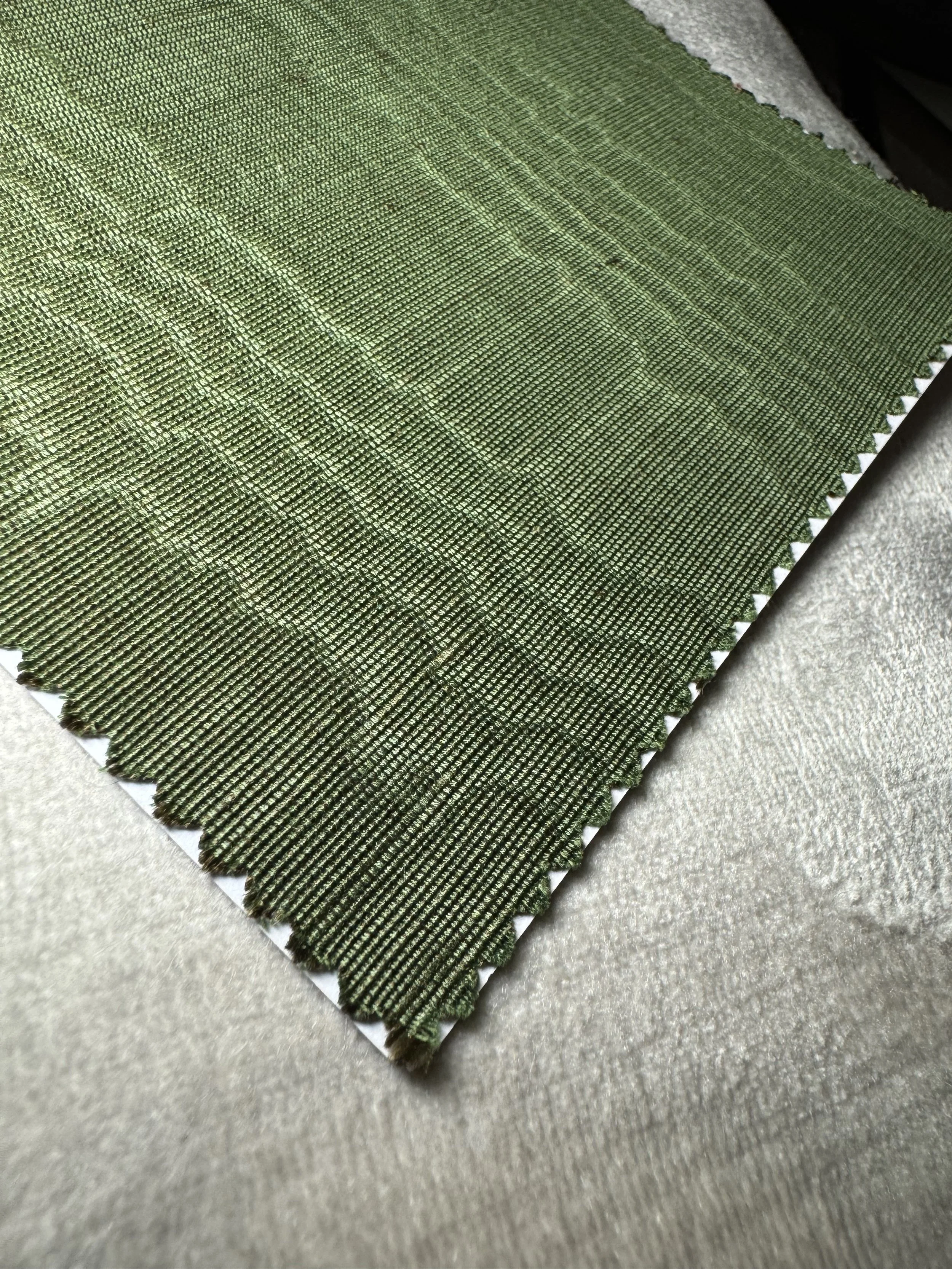
Moiré is one of those fabrics you almost have to see in person to fully appreciate. The word comes from the French for “watered,” and that is exactly what the surface resembles: ripples of water, wood grain or even the movement you might see inside a piece of stone.
Traditionally, the effect is created by pressing ribbed fabric under heat and pressure, producing an irregular, almost shimmering pattern.
I love moiré because it sits somewhere between a solid and a pattern. From across the room, it can read as a beautiful field of color. Up close, you begin to notice all of that movement.
It can be incredible on an upholstered chair, a pillow, a lampshade or even covering the walls of a small room. It has an old-world elegance to it, but in the right color and setting, it can feel surprisingly fresh.
Hand-Marbling: Where Art and Pattern Meet
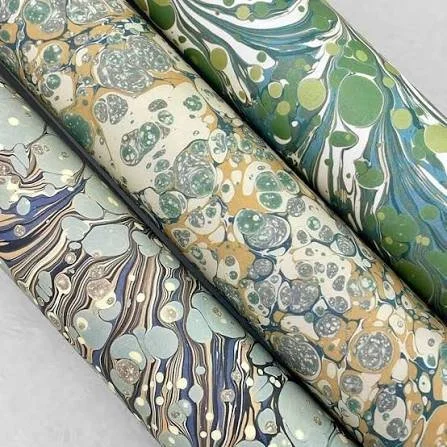
Hand-marbling may be one of my favorite examples of a pattern that doesn't really feel like a pattern at all.
Hand-marbling may be one of my favorite examples of a pattern that doesn't really feel like a pattern at all.
If you have ever opened an antique hardcover book and discovered those beautiful swirling or bubble-like papers inside the cover, you have probably seen hand-marbling. The technique has a long history in decorative paper and bookbinding, with traditions such as Turkish ebru and Japanese suminagashi creating patterns by floating pigments on the surface of water and transferring them onto another material.
The results can look like watercolor bubbles, stone, smoke, tiny islands or swirling currents. Depending on the technique, you might also hear patterns described as stone, shell, peacock or nonpareil marbling.
What makes hand-marbling so special is its unpredictability. No two pieces are exactly alike. There is a looseness to it that feels very different from a perfectly repeated printed pattern.
Translated into fabric, that same visual language can be incredible in an interior. A marbled textile on a pillow, upholstered chair, lampshade or small accent piece introduces color and movement without necessarily reading as a conventional print.
It is one of those patterns that makes you want to get closer and figure out exactly what you're looking at.
Chiné: Beautifully Out of Focus
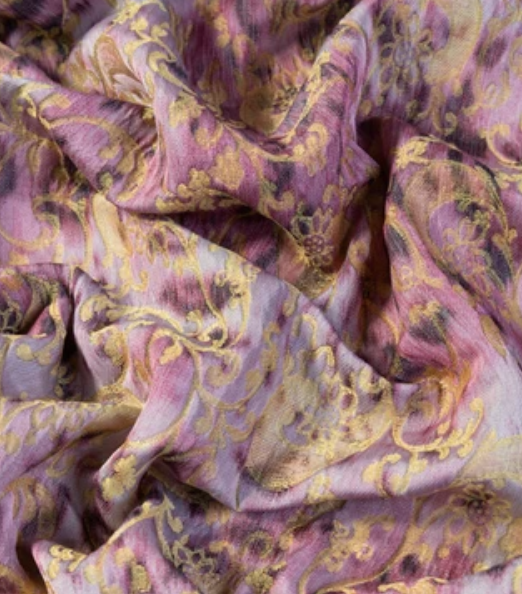
Chiné fabrics have a soft, slightly blurred appearance because the yarns are printed or dyed before the fabric is woven. Once those threads come together, the image is never perfectly crisp.
And that imperfection is the beauty of it.
Florals and other motifs seem to drift in and out of focus, almost like looking at an old watercolor. Chiné can add pattern without making a room feel overly decorated, and I particularly love it when a space needs something romantic but not overly sweet.
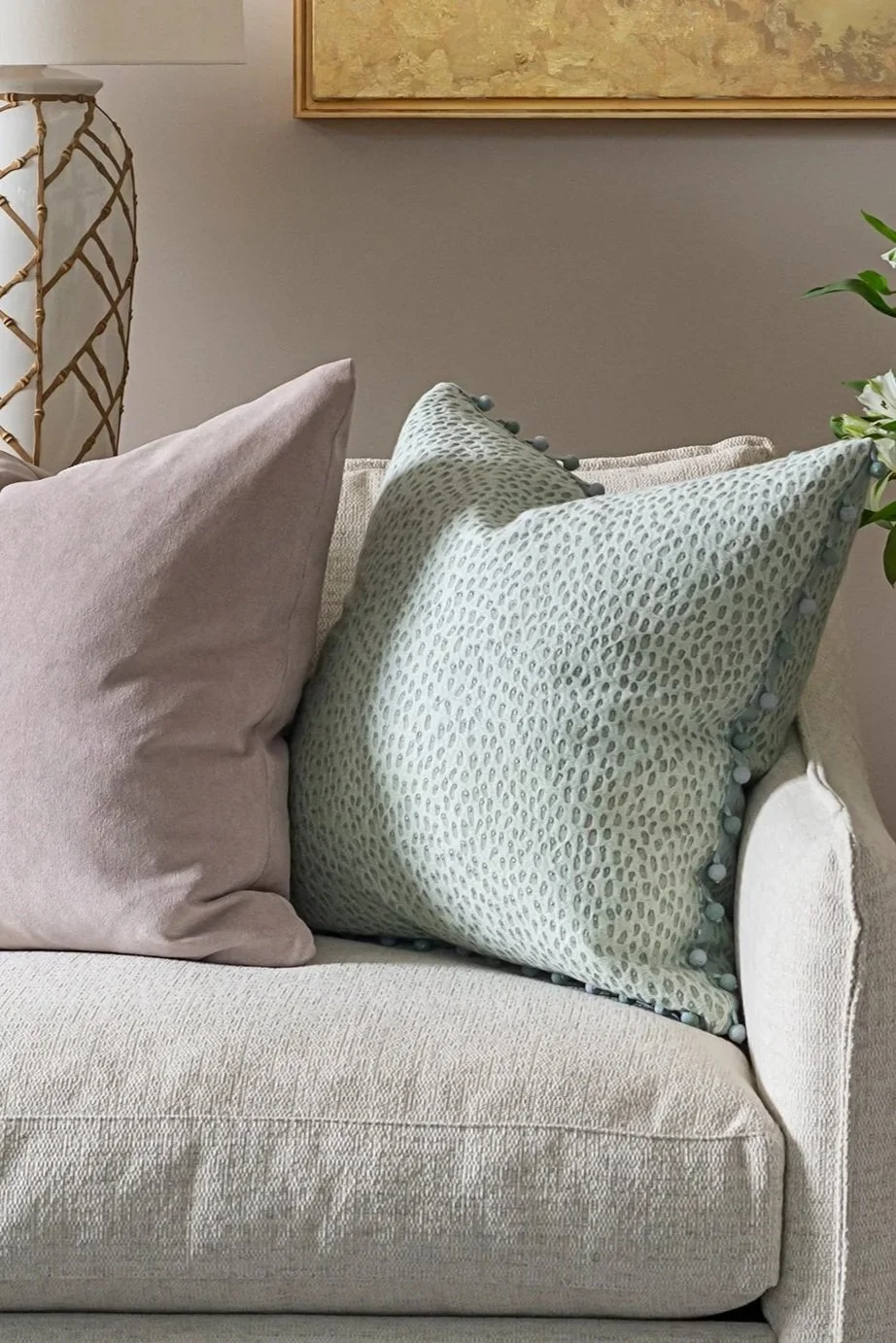
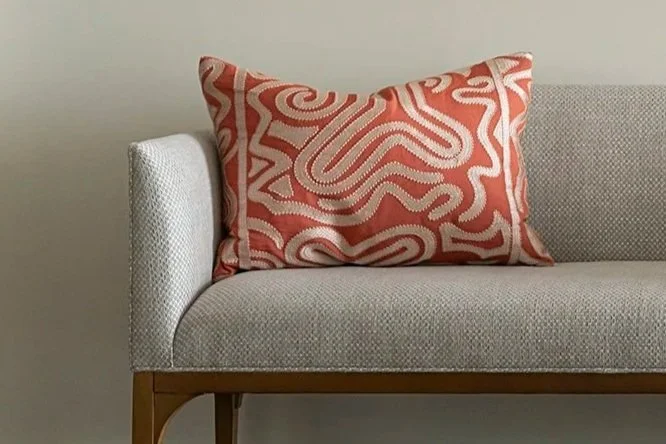
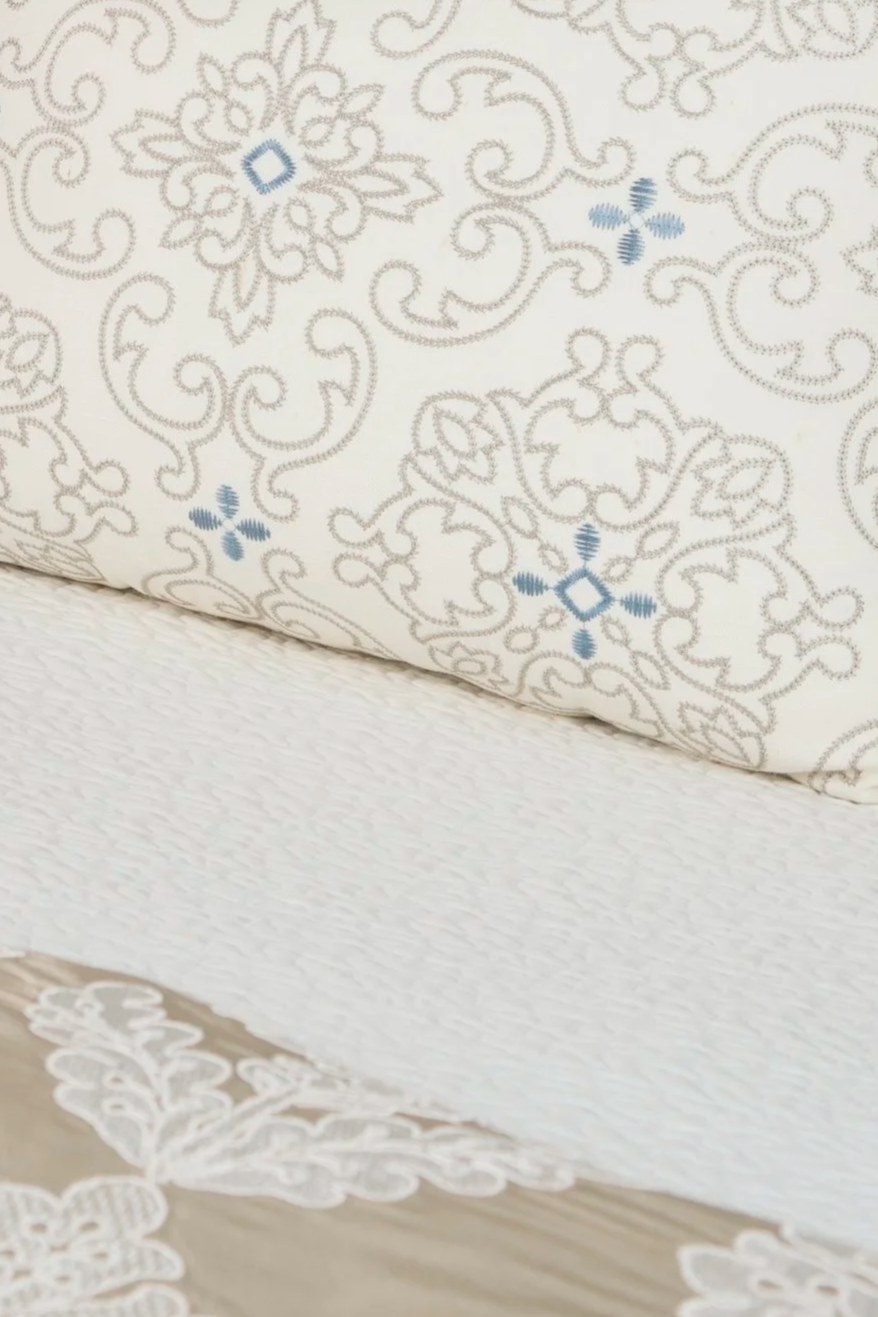
Photo By: Kris Shopov
Flame Stitch: The Wilder Relative of the Chevron
At first glance, flame stitch can resemble a zigzag or chevron, but look closer and it has much more movement.
Also associated with bargello embroidery, the pattern rises and falls in elongated, flame-like peaks, often using several colors to create depth and rhythm.
It can feel historic, graphic, playful or sophisticated depending on the palette. A multicolored version on a small chair or ottoman can completely change the personality of a room.
Vermiculé: Inspired by Nature's Wandering Lines
Vermiculé patterns are made up of irregular, wandering lines that twist and meander across a surface. The name itself comes from a word meaning “little worm,” referring to the way the lines travel through the design.
It may not sound particularly glamorous, but visually it can be incredibly beautiful.
The pattern feels organic rather than geometric, reminiscent of markings found in stone, bark, coral or the landscape. These are the types of patterns I find especially interesting because they bring a sense of nature into a room without literally depicting leaves, flowers or animals.
Cut Velvet: Pattern You Can Feel
Cut velvet is a wonderful example of how pattern can be created not only through color, but through texture.
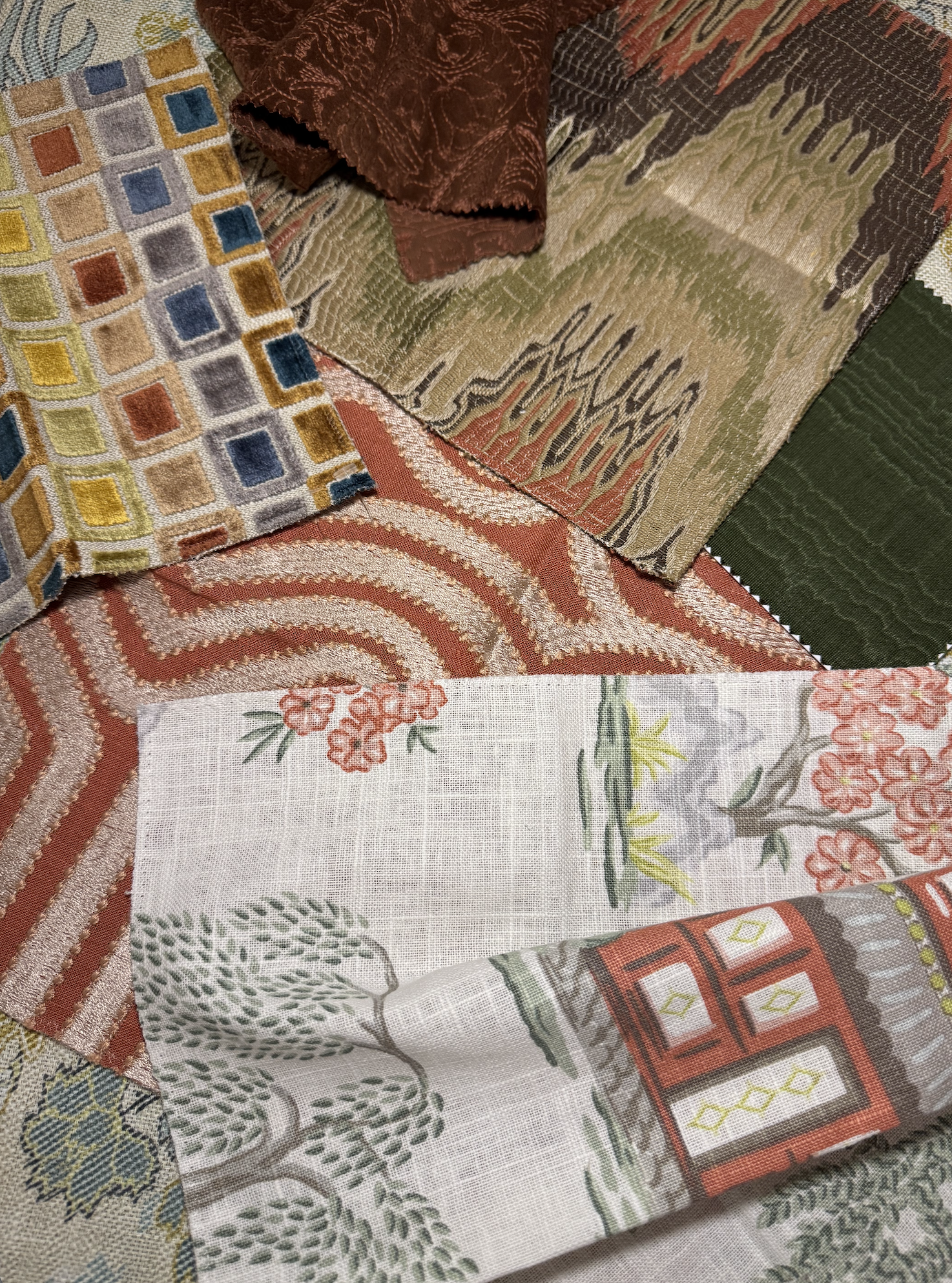
The design is formed by cutting portions of the velvet pile while leaving other areas uncut or flat, creating a raised pattern that catches the light differently as you move around it. Depending on the design, the effect can be subtle and tonal or wonderfully dramatic.
What I love about cut velvet is that it adds another layer of experience to a room. You don't just see the pattern, you want to touch it.
It can be especially beautiful on an accent chair, ottoman, pillow or upholstered bench, where the changing pile gives even a single-color fabric incredible depth. In more elaborate patterns, cut velvet can have an almost antique quality, but paired with cleaner furnishings it can feel completely fresh.
It is proof that sometimes the most interesting pattern in a room doesn't need multiple colors at all.
Matelassé: When Texture Becomes Pattern
Not every pattern needs color.
Matelassé is a weaving technique that creates a raised, quilted appearance without actually being quilted. The pattern is formed through the construction of the textile itself, giving it dimension through light and shadow.
It is a beautiful reminder that texture can function as pattern.
In a room already filled with color or print, a textural fabric like matelassé can provide visual interest without introducing another competing motif.
Toile, Reimagined
Most people recognize toile by its pastoral scenes repeated across a light background. But contemporary interpretations have taken toile in much more interesting directions.
You can find architectural scenes, tropical landscapes, animals, cityscapes and even slightly surreal imagery arranged in the familiar toile format.
I love the idea of taking something historically recognizable and choosing a version that makes you look twice.
Why the Unusual Ones Matter
One of the easiest ways for a room to feel collected rather than simply decorated is to introduce something that isn't immediately recognizable.
And it doesn't have to be loud.
Sometimes the most interesting fabric in a room is the one you can't quite describe. Is it a stripe? Is it abstract? Is it inspired by water, stone or something entirely different? Why does it seem to change depending on where you're standing?
Those moments create curiosity.
I often say that the angels are in the details, and textiles are one of my favorite places to find those details. An unusual weave on the back of a chair, a moiré lampshade, a hand-marbled textile or the changing texture of a cut velvet may not be the first thing someone notices when they enter a room.
But they are often the reason they keep looking.
And to me, those are the rooms that become the most memorable.